Deep Tissue massage
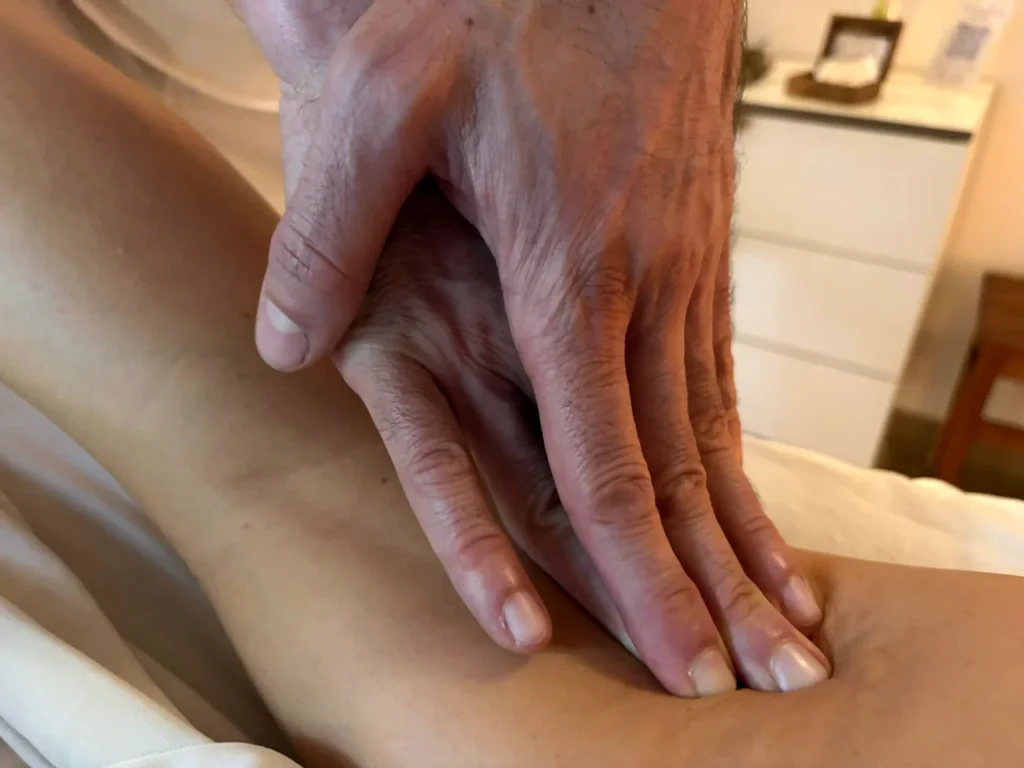
Sustained pressure, slow gliding strokes and time to take in each touch. Little joint movement and very little oil, with a depth we build together.
The touch can be firm, but the pressure builds up gradually. I don't work with a lot of force from the very first minute, and I won't ask you to put up with pain.
60 min · €55 90 min · €75
First time: I recommend 90 minutes. If you'd rather start with something shorter, 60 minutes works very well too.
What Deep Tissue is like with me
Before we start, we talk about what you're looking for and the areas you'd like to focus on. We take time to make sure you're comfortable on the table: position, support and temperature are all part of the session.
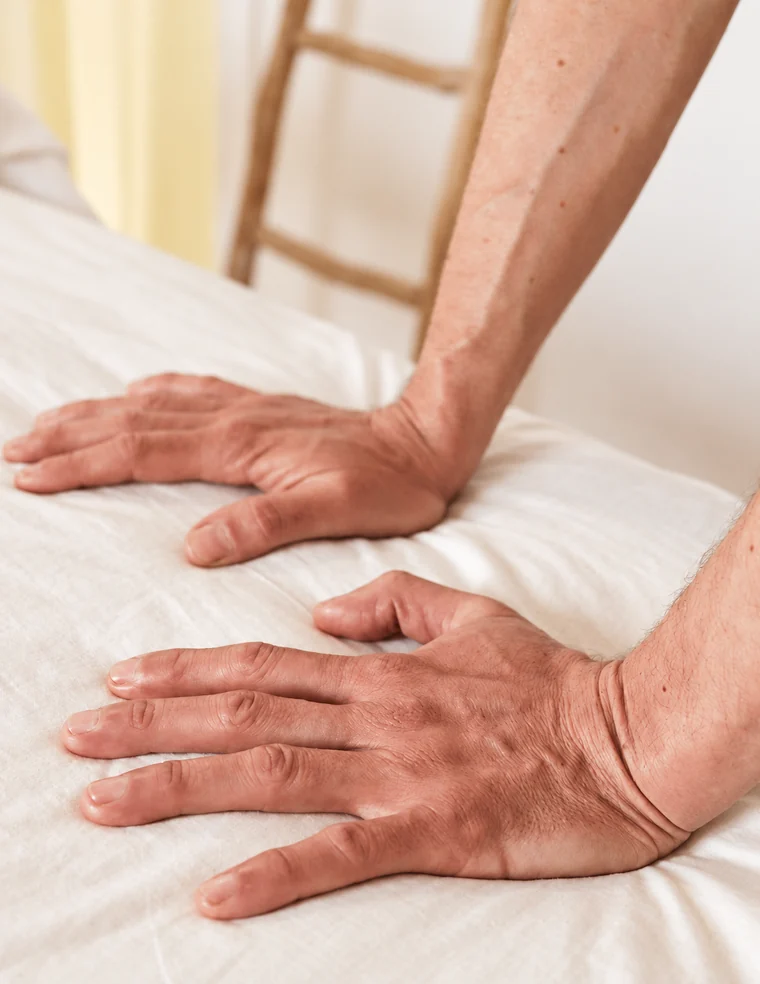
I work with my hands and forearms, using very little oil. The strokes are slow and the pressure is held: the touch stays on an area for a while, rather than running over it again and again with quick movements.
I lean my weight in gradually. I don't increase the pressure to follow a sequence or to go deeper. I give your body time to respond and adapt the massage before moving on.
I trained in Deep Tissue with Sandra Piro, at Deep House Barcelona, between 2025 and 2026.
A deep massage, without having to endure pain
Your breathing and your comfort guide me. If you need to hold your breath, tense up or make an effort to bear the touch, something needs adjusting.
You can ask me for less pressure, different support, a pause, or to stop working on an area. You can also have your massage in silence. You don't have to prove how much you can take.
Could it suit you?
- If you're looking for firm, slow, precise touch.
- If you enjoy stillness and having time to take in the pressure.
- If you know Deep Tissue and want this particular approach.
You can have Deep Tissue on your back. The difference lies in the starting point: here you're choosing a way of working. If you're coming because an area feels tense, in the back, neck and shoulder massage we start from that need and can combine different kinds of touch.
If what you'd like is to rest with more gliding strokes, you might prefer the relaxing massage. You don't need to arrive knowing which technique suits you: we can talk about it before you book.
The attention behind my hands
The Alexander Technique has taught me to sense my own weight, posture and breathing. That attention helps me perceive yours and support the touch with my whole body, without relying on the strength of my arms.
Vipassana meditation sustains my attention on the present moment: noticing small movements and postural reactions while you receive the massage.
Biodynamic Craniosacral Therapy has given me hours of practice in stillness, in contact with another person. Sensing rhythms, pulses and subtle movements in the tissues has refined my ability to feel how you are while I work with you.
The experience with Víctor
“I'd highlight his ability to listen to the body, his intuition and the way he looks after people, with exceptional warmth and sensitivity.”
Consuelo Pérez · Google review · translated
FAQs
Questions about the Deep Tissue massage
60 or 90 minutes?
I recommend 90 minutes for a first session, which gives us time to see how your body responds to firm, sustained touch. If you already know me or would rather start with less time, you can book 60. Read more about session length in the FAQs.
Does the session involve lots of stretching or movement?
That isn't what defines my Deep Tissue. There's little joint movement and a lot of slow, sustained touch. If you're looking for a more dynamic session, let me know and I'll point you in the right direction.
Is oil used?
Very little. There needs to be just enough glide to maintain the pressure and move slowly over the skin.
Can it be firm without me having to put up with pain?
Yes. Firm doesn't mean starting with maximum force. The pressure is built with you and adjusted if you need to hold your breath, tense up or bear the touch.
Might I feel tender the next day?
The experience can vary from person to person and depending on how you arrive at the session. If you feel tender or uncomfortable afterwards, let me know. We don't set out to cause pain or use it as a measure of whether the massage has worked.
If significant pain appears, gets worse or worries you, see a healthcare professional.